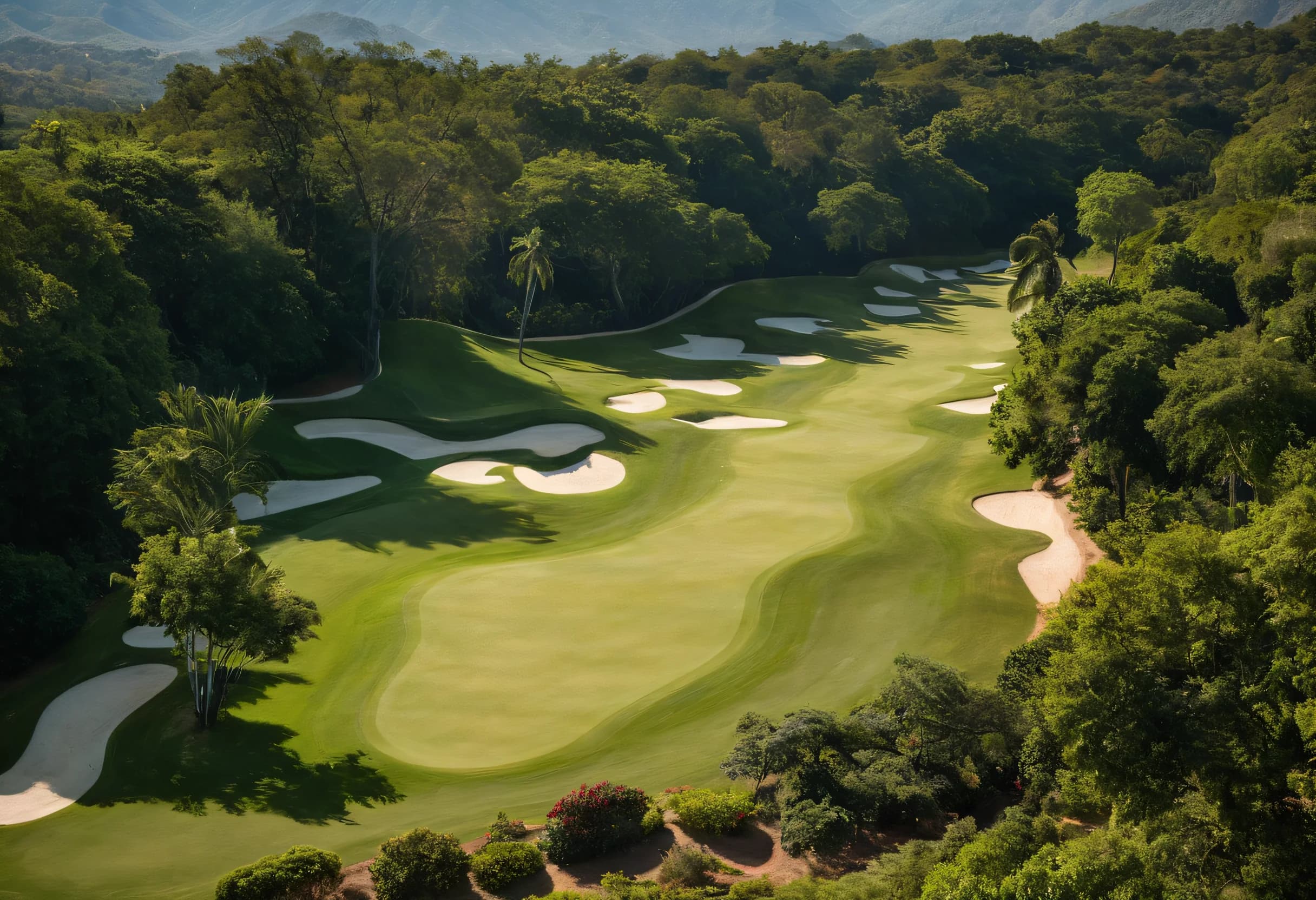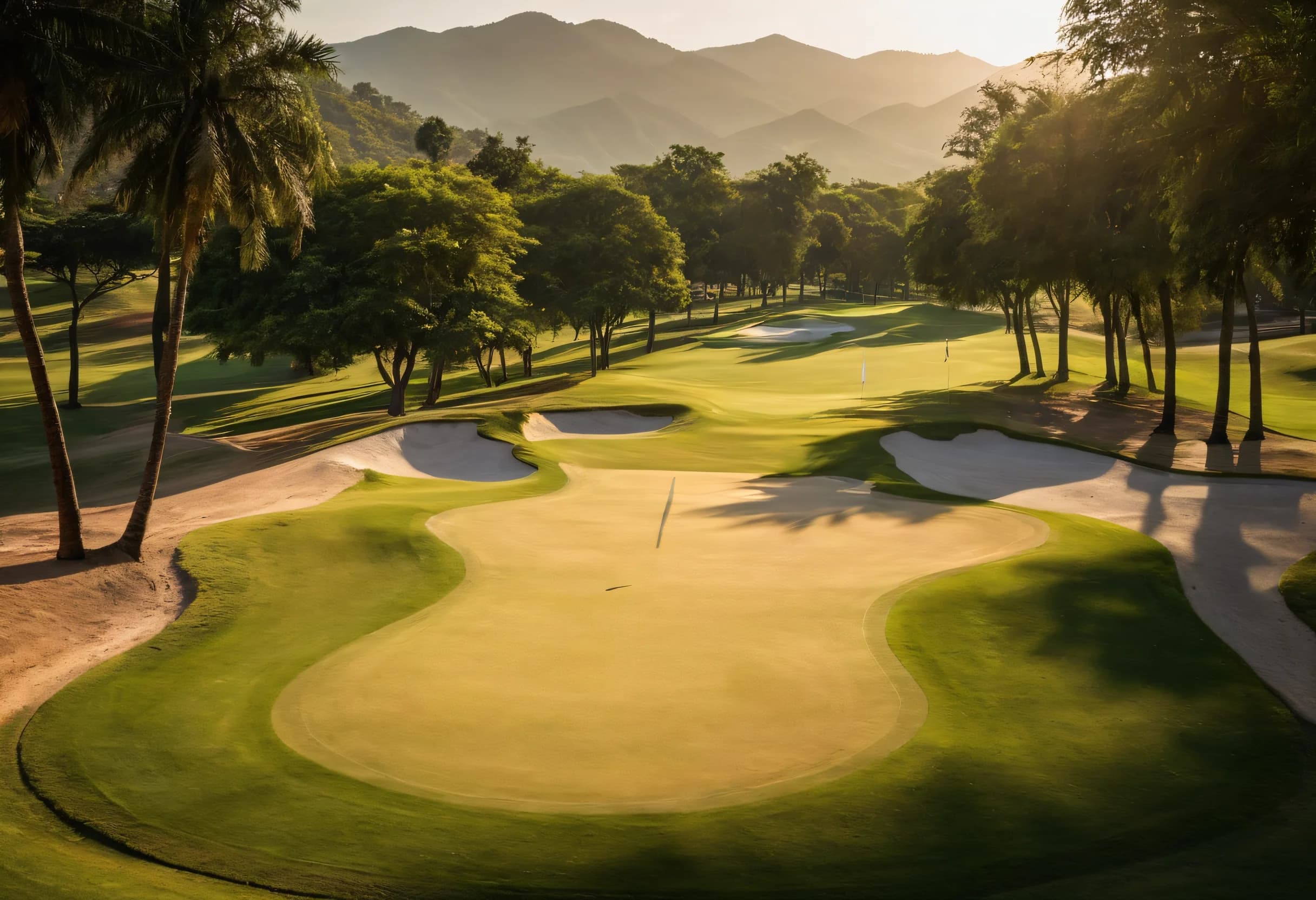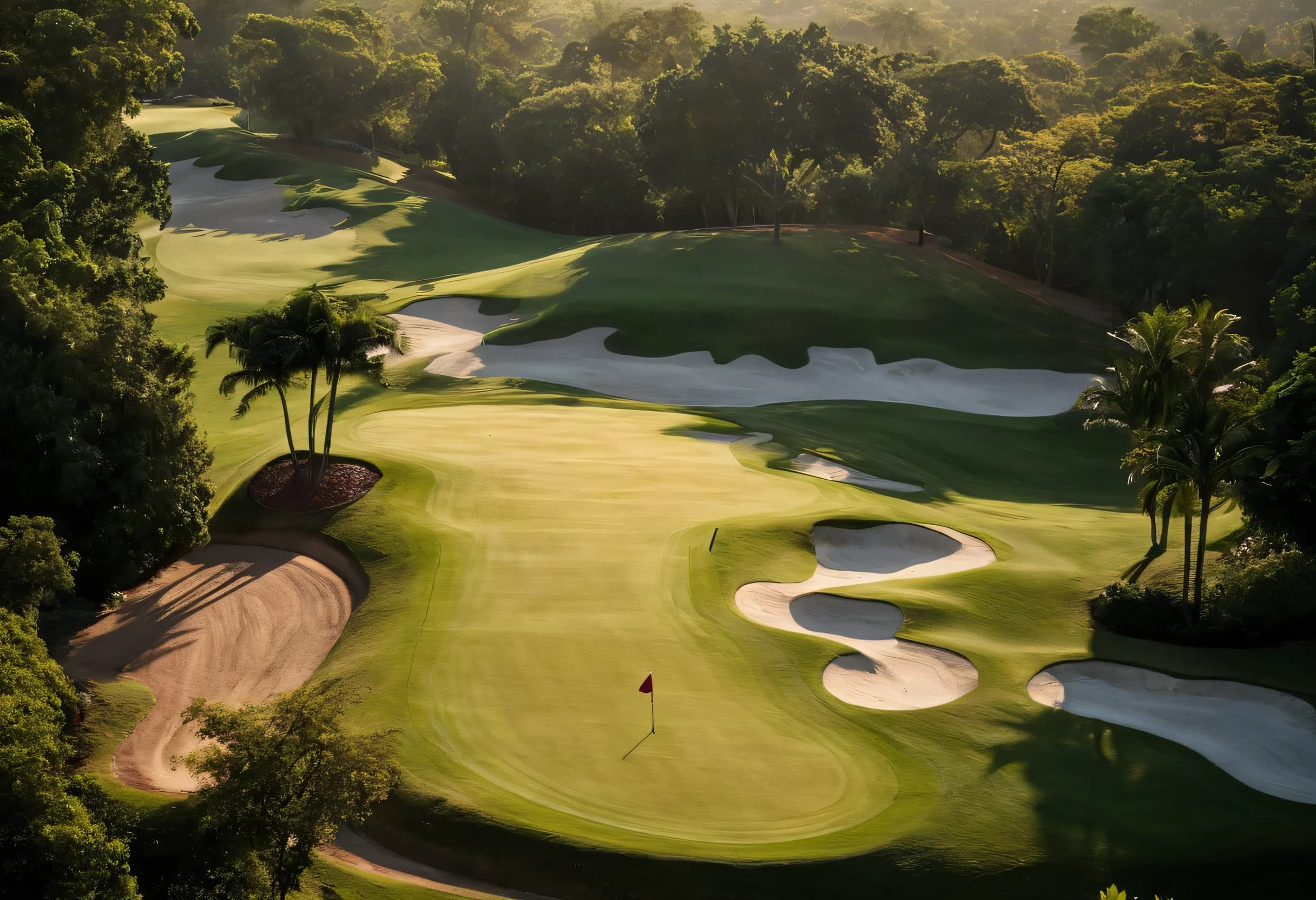
Choose Chiang Mai for more courses within a short drive, and culture-and-temple days; choose Phuket for marquee tracks, beach afternoons, and clean air in March. Both peak from November to February. The deciding factors are budget, the March haze, and whether your off days want mountains or the sea.
This is a straight comparison for a golfer weighing the north against the island. We run trips on the ground in Chiang Mai, so read this knowing where we operate, and see our full golf in Chiang Mai guide for the northern detail. For the wider northern picture, our best golf courses in Chiang Mai rundown ranks the local field.
Chiang Mai or Phuket for golf: which should you pick?
Pick Chiang Mai for variety and culture; pick Phuket for big-name courses, beaches and reliable spring air quality. Budget and travel dates usually settle it.
Chiang Mai gives you ten-plus courses inside a 45-minute radius, high-season 2026-27 all-in rates from about ฿3,780 to ฿6,500 at the courses' public rates, and Old City culture on your rest days. Phuket gives you fewer courses but louder names, Andaman beaches, and a dry season that holds through March when Chiang Mai's air turns bad. Neither is "better" outright. The right answer depends on what your non-golf hours look like and how much you want to spend per round. See the Chiang Mai golf holiday cost breakdown for a full northern budget.
How do the golf courses compare?
Chiang Mai is highland and mountain golf with the region's best conditioning at Chiang Mai Highlands; Phuket leads with the world-name Blue Canyon and quarry-style Red Mountain.
In the north, Alpine Golf Resort is a Ron Garl 27-hole layout that hosted the Asian Tour in 2013 and 2014, with a long par-5 4th near 652 yards. Chiang Mai Highlands is the best-conditioned course in the region, paspalum turf with 130-plus bunkers. Value picks like Gassan Panorama hide a 666-yard par-6.
Phuket's Blue Canyon Canyon Course is the island's headline track, host to past Johnnie Walker Classic events, and Red Mountain is a dramatic tin-mine quarry layout. The honest trade-off: Phuket has fewer courses, so a week there means replays or longer drives between the top tracks, while Chiang Mai keeps a fuller field within reach. Browse the northern field on our golf-courses directory.
| Factor | Chiang Mai | Phuket |
|---|---|---|
| Signature course | Chiang Mai Highlands (best-conditioned) | Blue Canyon Canyon Course (world-name) |
| Courses within ~45 min | Ten-plus | Roughly five to six |
| High-season all-in (premium) | ฿4,500 to ฿6,500 | ฿4,500 (Blue Canyon Canyon, agent) |
| Lower-priced option | Gassan Panorama ฿3,780 to ฿4,410 all-in | Loch Palm ฿2,000 to ฿3,500 green |
| Off-course | Temples, food, markets | Beaches, islands, resorts |
| March air quality | Poor (burning season) | Clear (coastal) |
Which is cheaper for a golf trip?
The round costs about the same. Northern premium rounds run all-in ฿4,500 to ฿6,500 in high season 2026-27; Phuket's marquee tracks run ฿4,500 up to ฿5,500 a round.
In high season 2026-27 the public all-in rate is ฿4,500 for Chiang Mai Highlands (฿3,350 green, ฿400 caddie, ฿750 cart) and ฿6,500 for Alpine (course public rates, 2026-27). Gassan Panorama is ฿4,410 in the morning and ฿3,780 in the afternoon. In Phuket, the Blue Canyon Canyon Course lists an agent all-in near ฿4,500 (฿3,400 green, ฿400 caddie, ฿700 cart), and Red Mountain runs ฿3,500 to ฿5,500 a round (phuketgolfcourse.com, accessed 2026-09-05). Where Phuket claws it back is flights and hotels: it has more direct international routes and a deeper resort market. So the rounds cost about the same at the top end, and the trip total comes down to airfare and rooms.
Do the golf seasons line up?
Yes at the peak: both play best November to February, cool and dry. They split in the shoulder, where Chiang Mai turns hazy in March and Phuket's dry season holds into April.
Chiang Mai's cool-dry peak (Nov to Feb) brings highland mornings of 15 to 22C and clear mountain views, but it is the dearest and hardest to book. Phuket shares that November to April dry window with temperatures of 27 to 32C and little rain, per the Asia Golf Specialists month-by-month guide (accessed 2026-09-05). Both drop to a green season from May to October: humid, short afternoon storms, cheaper rates, easier same-week tee times. Phuket's rains run heavier and later (Sep to Oct), so morning tee times matter more there. For the northern timing detail see the best time for golf in Chiang Mai.
What about March air quality?
This is the real separator. Chiang Mai's burning season peaks in March with hazardous air; Phuket stays clear. If March is your only window, play Phuket.
Chiang Mai's crop-burning season runs roughly mid-January to mid-April and peaks in March, with AQI routinely past 150 and 300-plus on the worst days. In peak burning season Chiang Mai regularly ranks among the world's most polluted cities, with daily PM2.5 readings that climb into the hazardous band (IQAir Chiang Mai, accessed 2026-09-05). Phuket, on the Andaman coast and away from the inland burning, is unaffected. We do not hide this: it is the honest downside of a March golf trip in the north. Our burning season golf in Chiang Mai guide covers how to plan around it.
What is there to do off the course?
Chiang Mai is a culture-and-food base; Phuket is a beach-and-water base. Match the destination to what your rest days, and any non-golfing partner, actually want.
In Chiang Mai the Old City temples, Doi Suthep, a cooking class and the night markets are all inside 30 minutes of the courses, which makes it the easy pick for a mixed golf-and-culture group. Phuket trades that for Andaman beaches, island boat days and big resort pools. Neither is a compromise; they are different holidays. A couple where one plays and one does not often prefers Chiang Mai for markets and temples, while a golf group chasing a beach bar after the round leans Phuket.
Which is easier to reach and get around?
Phuket has more direct international flights; Chiang Mai has shorter, simpler course transfers. Both fold private transfers into a package so you skip the Grab lottery.
Chiang Mai's CNX airport is about 4km from the Old City, a 10 to 15 minute taxi, and the courses ring the valley 30 to 45 minutes out. Phuket International is farther from the main beaches and traffic is heavier, though several top courses sit near the airport in the north of the island. In both places a pre-booked private round-trip beats Grab for early tee times and bag size, and a package covers green fees, caddies, carts, hotel and airport transfers in one quote. That is the case for going enquiry-driven through our golf packages rather than stitching each round together yourself.
How does caddie culture differ?
It does not. Caddies are mandatory Thailand-wide, one per golfer, and the norms are the same in Chiang Mai and Phuket.
Expect a caddie fee of ฿300 to ฿400 in Chiang Mai and ฿350 to ฿450 in Phuket, added to the green fee. The tip is separate and expected: ฿400 to ฿600 per 18 holes, more for a premium course or an excellent caddie. Hand it over in cash at the bag drop after the round and say "khob khun khrap" or "kha". Your caddie drives the cart, reads greens, cleans clubs and keeps score at either destination.
Which suits your trip?
Chiang Mai for variety, culture and cool-season mornings. Phuket for marquee courses, beaches and clean spring air. Budget and dates decide it.
If you want temples and food between rounds, book the north: a Highlands Classic five-night, four-round trip or a Northern Value four-night package covers the best courses with transfers included. If you want the sea and a big-name track, or your only dates fall in March, Phuket is the safer call. Weighing other northern options? Compare Chiang Mai vs Hua Hin for golf, Chiang Mai vs Chiang Rai for golf, and Chiang Mai vs Bangkok for a golf trip. CMGT Golf is enquiry-driven, so tell us your dates and group size and we send a quote rather than an instant checkout.
Get a Chiang Mai golf quote for your datesPackages: green fees, caddies, carts, a golf-resort room and a private vanFrequently asked questions
Is Chiang Mai or Phuket cheaper for a golf trip?
It is close on the round. Chiang Mai's public high-season 2026-27 all-in rates run from about ฿3,780 (Gassan Panorama in the afternoon) to ฿6,500 (Alpine), with Chiang Mai Highlands at ฿4,500 (course public rates, 2026-27). Phuket's marquee courses sit in the same band: Blue Canyon's Canyon Course lists an agent all-in near ฿4,500, and Red Mountain runs ฿3,500 to ฿5,500 a round. Phuket often wins on flights and hotel choice, so the total trip cost is decided by airfare and rooms more than by the round.
Does the March burning season affect Phuket golf?
No, and that is Phuket's single biggest advantage in spring. Chiang Mai's burning season runs roughly mid-January to mid-April and peaks in March, with AQI routinely past 150 and 300-plus on the worst days. During peak burning season Chiang Mai regularly ranks among the world's most polluted cities. Phuket sits on the Andaman coast, away from the crop-burning inland, and stays clear through that window. If your only free dates are in March, Phuket is the safer golf trip.
Which has better golf courses, Chiang Mai or Phuket?
Both have a strong top tier, but they feel different. Chiang Mai is mountain and highland golf: Chiang Mai Highlands is the best-conditioned course in the north, and Alpine Golf Resort brings a Ron Garl 27-hole layout that hosted the Asian Tour. Phuket's Blue Canyon Canyon Course is a genuine world-name track, and Red Mountain is a dramatic quarry-style layout. Chiang Mai offers more courses within a short drive; Phuket offers fewer but higher-profile names. Pick scenery and variety, or pick marquee tracks.
Do the golf seasons line up in Chiang Mai and Phuket?
The peak windows overlap. Both play best in the cool, dry stretch from November to February, with green fees and demand highest then. The difference is the shoulder. Chiang Mai's March to April is hot and hazy from burning season, while Phuket's dry season stretches comfortably into April. Both share a green season from roughly May to October with short afternoon storms, cheaper rates and easier tee times. Book November to February at least four to six weeks out at either destination.
How much off-course time should I plan for each?
Chiang Mai suits culture and food days: Old City temples, Doi Suthep, cooking classes and night markets are all inside 30 minutes of the courses. Phuket suits beach and water days: Andaman beaches, island boat trips and resort pools. A common split is a golf-plus-culture trip in Chiang Mai for players travelling with a non-golfing partner who wants markets and temples, and a golf-plus-beach trip in Phuket for a group that wants a pool and a beach bar after the round. Both work as five to seven night trips.