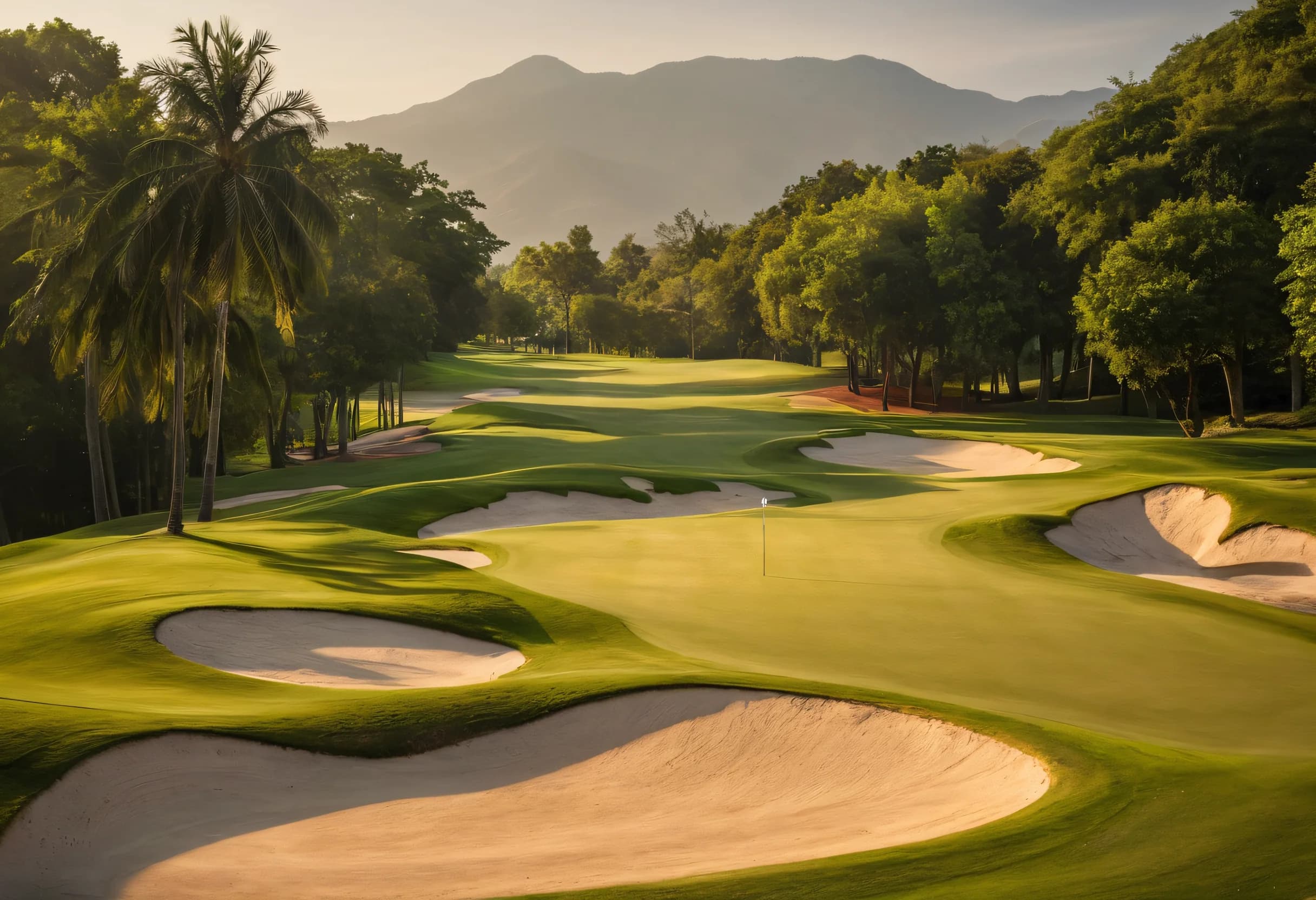
If you get hurt on a Chiang Mai golf course, tell your caddie, call 1669 for anything serious, and go to a private city hospital such as Bangkok Hospital Chiang Mai. The city has JCI-accredited private care and a public teaching hospital of around 1,400 beds. The catch is distance. Most courses are 30-45 minutes out of town, so it pays to know the plan before you tee off.
We run golf trips around Chiang Mai all year, and many of our guests are over 50. Each season a few of them need a doctor, usually for a back twinge, heat exhaustion or a slip on a wet cart path. This guide covers what to do and where to go, based on what has worked for our groups.
What should I do first if I get hurt on the course?
Stop playing, tell your caddie straight away, and decide in the first five minutes whether you need an ambulance or a car.
Chiang Mai courses assign a caddie to every golfer, and that helps here. Your caddie can alert the clubhouse, get you back to the bag drop by cart, and tell staff which access road is quickest. Many caddies have years on the same course and know exactly where the gate and the nearest road are. Our caddie culture and tipping guide explains how that relationship works.
Use this rule of thumb:
- Call 1669: chest pain, collapse, confusion, suspected heatstroke, a head injury, or someone who can't be moved.
- Go by private car: a strained back, a twisted ankle, a cut that needs stitches, or heat exhaustion that is settling.
The UK government's Thailand health advice (accessed 2026-10-20) lists 1669 as the local ambulance number and also says you can dial 191 and ask for an ambulance. If you are unsure, call. The operator can help you judge it, and the clubhouse staff can speak Thai on your behalf.
Which hospitals do tourists use in Chiang Mai?
Most visiting golfers use a private hospital in the city. For major trauma or specialist referrals, the public teaching hospital is the backstop.
| Hospital | Type | Scale | Best for | Trade-off |
|---|---|---|---|---|
| Bangkok Hospital Chiang Mai | Private, BDMS group | Mid-sized private hospital | Emergencies, insurer-billed care, international patients | Among the most expensive options |
| Chiangmai Ram Hospital | Private | Large city hospital | Orthopaedics, scans, follow-up visits | Check accreditation and your insurer's network before you go |
| Maharaj Nakorn Chiang Mai (Suandok) | Public, Chiang Mai University | About 1,400 beds | Major trauma, specialist and tertiary care | Longer waits and less English at the front desk |
Bangkok Hospital Chiang Mai (accessed 2026-10-20) says it is JCI-accredited and treats both local and international patients across its clinics. Maharaj Nakorn Chiang Mai Hospital (accessed 2026-10-20), known locally as Suandok, is the Chiang Mai University teaching hospital and a major referral centre for northern Thailand.
Private hospitals here run international patient desks, so expect English-speaking coordinators, interpreters for other languages on request, and staff who deal with foreign insurers every day. Costs vary widely with the treatment, so ask for an estimate at the desk before anything non-urgent.
How far are the courses from a hospital?
Expect roughly the same drive back to a city hospital as the drive out, usually 30-45 minutes, and longer from the remote courses.
The private hospitals are in the city, and the courses ring the valley around it. Lanna Golf Club is about 10 minutes from the Old City, and North Hill Golf Club is about 15 minutes from the airport, so those two are the closest to care. Gassan Khuntan is the furthest transfer we run, at 45 minutes or more on mountain roads.
This is the honest downside of golf here. Ambulance response is quicker in town, but one expat guide puts it at 30 minutes or more in rural areas (accessed 2026-10-20). For anything that isn't life-threatening, a private car already waiting at the course is often faster than waiting for an ambulance. That is one practical reason our trips include a private driver for every round. If you have a heart condition or limited mobility, tell us when you enquire and we will lean the schedule towards the courses closest to town.
What emergency numbers do I need in Chiang Mai?
Save three numbers: 1669 for an ambulance, 191 for police or general emergencies, and 1155 for the English-speaking Tourist Police.
Calls from a foreign SIM card sometimes fail to connect to Thai short numbers. A local SIM or eSIM bought at Chiang Mai airport fixes that, and it costs little. The airport transfer guide covers what to sort out when you land. Add your hotel's front desk number too. Hotel staff are often the quickest way to get a taxi or a Thai speaker on the line.
How do I spot heat exhaustion before it becomes heatstroke?
Watch for dizziness, headache, nausea, cramps and heavy sweating. If cooling down doesn't help within 30 minutes, it has become an emergency.
Heat is the most common reason our guests stop a round early. Afternoons are warm even in the cool November to February season, and from March to May temperatures often pass 35C. The NHS guidance on heat exhaustion (accessed 2026-10-20) gives clear steps:
- Move the person into shade or the air-conditioned clubhouse.
- Remove extra layers, cool the skin with water and fan them.
- Give water or an oral rehydration drink.
- Call 1669 at once if their skin is hot and dry, they are confused, they have a seizure, or they aren't recovering after 30 minutes.
Prevention is easier. Take the first tee time of the day, drink at every cart stop, and put a cold towel on your neck. Most courses have drinks stations every few holes, and caddies will carry iced towels if you ask. Our guide to beating the heat on Chiang Mai golf courses goes into more detail.
What are the most common golf injuries on a Chiang Mai trip?
Lower-back strain comes first, then heat illness, then wrist or elbow pain from hitting off hard dry-season ground. Most of these are avoidable.
The pattern we see is golfers playing four or five rounds in five days when they play once a week at home. Back strain usually turns up around day three. Other repeat problems:
- Wrist and elbow pain from firm fairways in the dry season.
- Slips on wet cart paths and bridges in the June to October green season.
- Blisters and sunburn from new shoes and short sleeves.
Plan a rest day between hard rounds. Book the hilly courses such as Chiang Mai Highlands and Alpine Golf Resort for when you are fresh, and save flatter layouts for later in the week. Warm up properly too. A few minutes on the range and some gentle rotations before the first tee do more than any brace. Our Thai massage recovery guide explains which kind helps tired golf muscles and which kind to avoid if you are already injured.
What should I pack for minor knocks and strains?
A small kit in your golf bag handles most minor problems, and Chiang Mai's pharmacies cover the rest.
Pharmacies are everywhere in the city, including the big chains in the malls, and many pharmacists speak some English. They stock painkillers, anti-inflammatory gels, rehydration salts, plasters and sunscreen. Bring any prescription medicine from home in its original packaging, with a copy of the prescription.
What we suggest keeping in the bag:
- Rehydration sachets and a spare bottle of water.
- Blister plasters and a small roll of tape.
- High-factor sunscreen and lip balm.
- Any personal medication, such as an inhaler or heart tablets, plus a note of the dose.
None of this replaces a doctor. If pain is sharp, getting worse, or follows a fall, go to a hospital rather than self-treating.
How does travel insurance work with Chiang Mai hospitals?
The hospital will want a payment guarantee before treatment, so call your insurer's assistance line first and keep a credit card ready.
The UK Foreign Office (accessed 2026-10-20) says all Thai hospitals require a guarantee of payment before treating patients. It adds that private hospitals are of a high standard but can be expensive, and recommends insurance that covers treatment and unexpected medical evacuation.
Three checks before you fly:
- Golf cover. Some policies exclude sports or limit golf to equipment cover. Read the wording.
- Pre-existing conditions. Declare heart, back and respiratory conditions, or a claim connected to them may be refused.
- Direct billing. Ask whether your insurer works directly with Bangkok Hospital Chiang Mai or Chiangmai Ram. If it does, you may avoid paying a large deposit up front.
Keep every receipt and medical report. Insurers usually want the doctor's notes and an itemised bill, and these are much easier to get at the desk on the day than by email weeks later.
What happens to the rest of my golf trip if I get injured?
On a package, your operator moves or cancels rounds and changes transfers. If you booked everything yourself, you call each course.
This is where a package helps most. On the Highlands Classic 5-night or Northern Value 4-night trips, our local team can help arrange transport to hospital, help with Thai at the front desk, and rework the rest of the week. Rescheduling depends on each course's policy and isn't guaranteed. If you booked direct, you deal with each pro shop and driver yourself, often in the middle of a hospital visit.
To be fair, a package won't save you money if you play only one round. Booking direct can be cheaper for that. The value is in the support when things go wrong. Before you book, compare options on our Chiang Mai golf packages page, and if mobility is a concern, ask us to build the week around closer, flatter courses such as Lanna or North Hill. Our first-timer mistakes guide covers the scheduling mistakes behind most injuries.
Plan a Chiang Mai golf trip with support on the groundPrivate driver for every round, a local team, and a tailored quote by enquiryFrequently asked questions
Which hospital should a tourist go to in Chiang Mai after a golf injury?
For most visiting golfers, a private hospital in the city is the practical first stop. Bangkok Hospital Chiang Mai describes itself as a Joint Commission International (JCI) accredited facility with an emergency department that treats local and international patients. Chiangmai Ram Hospital is another large private option that many foreigners use. For major trauma or specialist care, Maharaj Nakorn Chiang Mai Hospital (Suandok) is the region's public teaching hospital, with around 1,400 beds. Private hospitals cost more but usually mean shorter waits and staff used to dealing with insurers.
What is the emergency number for an ambulance in Chiang Mai?
Dial 1669 for the national emergency medical service, or 191 and ask for an ambulance, as the UK government's Thailand health advice says. The Tourist Police are on 1155 and have English-speaking operators, but they may not be able to send an ambulance themselves, so use 1669 or 191 first for a medical emergency. Calls from a foreign SIM sometimes fail to connect, so a local Thai SIM or eSIM is worth having. On a course, tell your caddie first. They can alert the clubhouse, which knows the fastest way to the road.
Do Chiang Mai hospitals want payment before treating tourists?
Yes. The UK Foreign Office says all hospitals in Thailand require a guarantee of payment before they treat a patient. In practice that means a credit card at the desk or a guarantee letter from your travel insurer. Call your insurer's emergency assistance line as soon as you are referred anywhere, because many policies need to approve treatment or the hospital first. Carry your policy number and the 24-hour assistance number on your phone and on paper in your golf bag. Without either, expect to pay up front and claim the money back later.
How do I avoid heatstroke playing golf in Chiang Mai?
Book the first tee time of the day, especially from March to May when temperatures often pass 35C. Drink water at every cart stop, add an electrolyte sachet on the back nine, and wear a wide-brimmed hat. Know the warning signs: dizziness, headache, nausea, cramps and heavy sweating. The NHS advises that someone with heat exhaustion should feel better within about 30 minutes of cooling down and drinking fluids. If they don't, or they become confused or stop sweating, treat it as heatstroke and call 1669. Stop the round early. Nobody remembers a scorecard from a day spent in hospital.
Can I keep playing golf after hurting my back on a Chiang Mai trip?
It depends on the injury, so see a doctor before you decide. A mild muscle strain often settles with a rest day, ice and gentle stretching, and many golfers come back for nine holes later in the trip. Sharp pain down a leg, numbness or pain after a fall needs a proper assessment, and Chiang Mai's private hospitals can usually arrange X-rays and scans quickly. Because packages are planned around set tee times, tell your operator early. We can help move or cancel rounds and change transfers rather than leaving you to sort it out with each course.