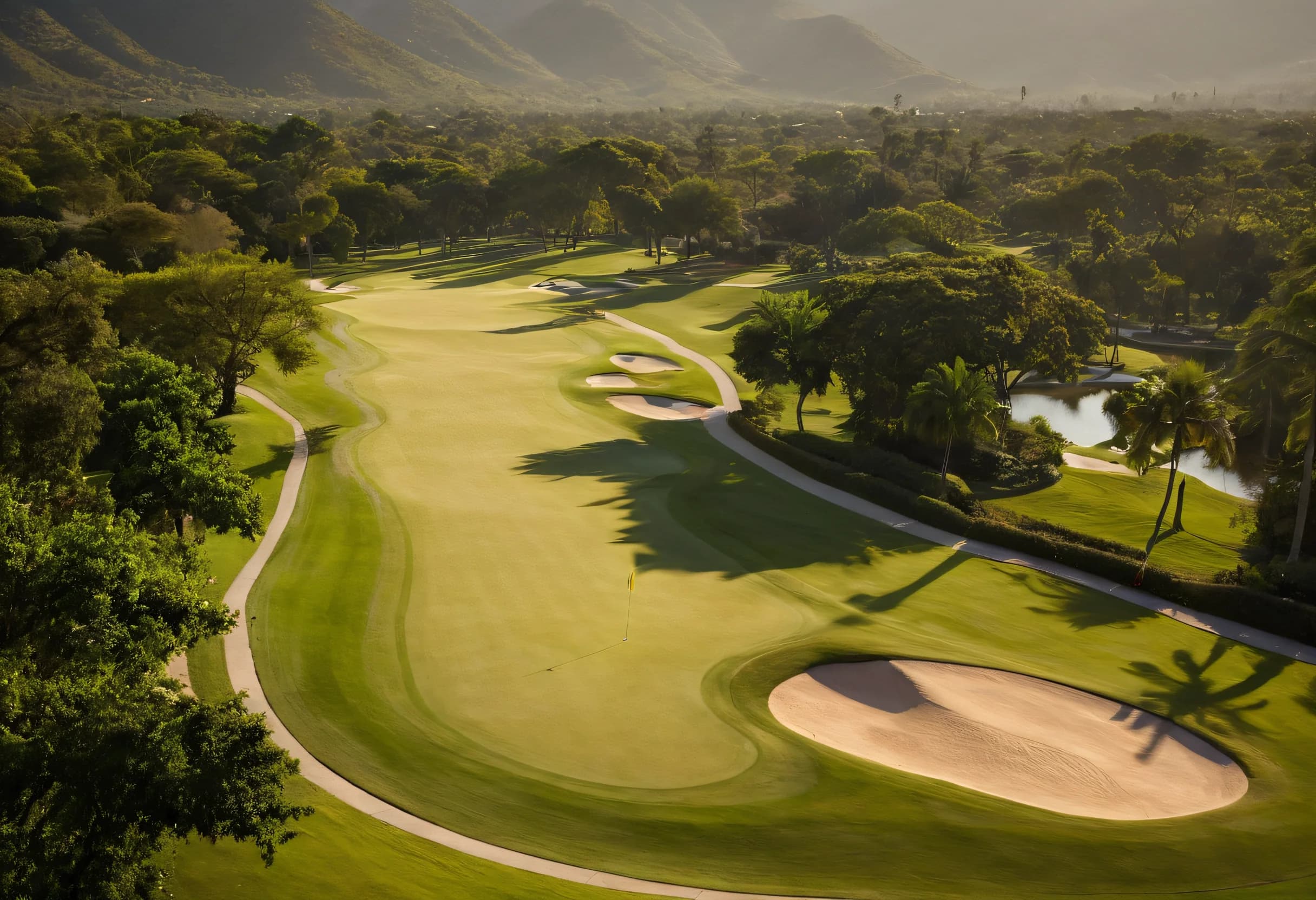
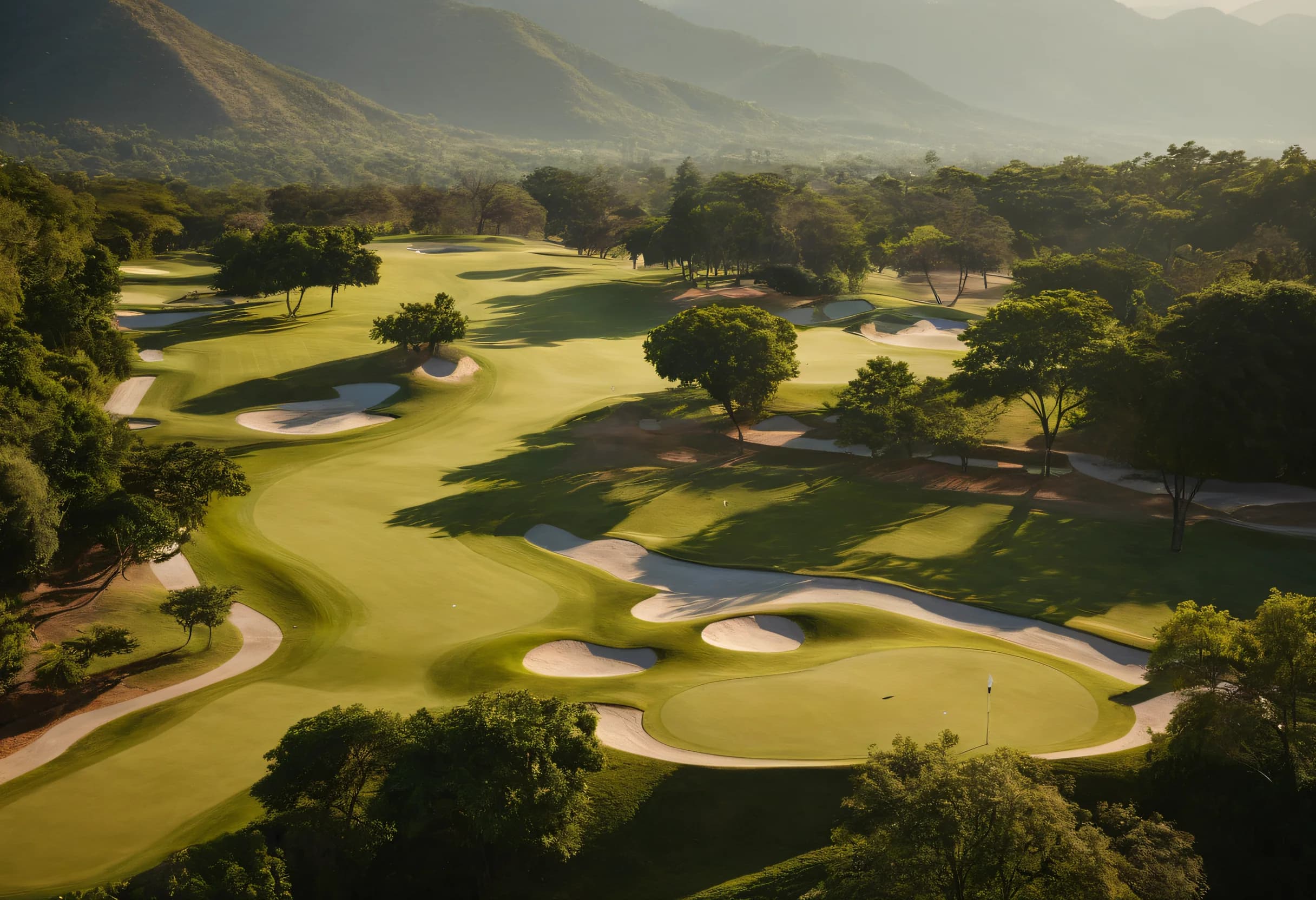
In Chiang Mai, golf tourism does the most for local people through caddie tips, drivers, clubhouse staff and the small businesses golfers spend in after the round. Green fees do the least, because they go to course owners. The cash tip is the biggest thing you control: ฿400-600 per 18 holes, handed straight to your caddie (CMGT Golf, 2026).
Who earns money when you play a round in Chiang Mai?
A round pays the course owner, the caddie, the cart and grounds staff, your driver and the clubhouse kitchen. How much the caddie gets depends heavily on your tip.
The table below shows how a typical green-season round splits. It uses the Apr-Oct 2026 all-in rate at Chiang Mai Highlands Golf & Spa as the example.
| Line item | Amount | Paid to | Who mainly benefits |
|---|---|---|---|
| Green fee | ฿2,250 | Course | Owner, grounds and clubhouse staff wages |
| Caddie fee | ฿400 | Course | Caddie receives a share; split varies by course |
| Cart fee | ฿750 | Course | Course operations and fleet |
| Caddie tip | ฿400-600 standard | Caddie, in cash | Caddie directly, 100% |
| Lunch and drinks | Varies | Clubhouse | Kitchen and service staff |
| Private transfer | Roughly ฿1,400-2,500 round trip | Driver or operator | Local driver |
Courses across the valley work the same way. The fixed fees go to the course. The money that reaches a local person's pocket the same day is the tip, the driver's fare and whatever you spend in town that evening.
Clubhouse staff, greenkeepers and cart attendants are mostly hired from nearby villages, so the course's own wage bill does keep some money local. That share is not visible to you as a golfer, and you cannot change it. You can only control the tip and where you eat, sleep and get driven.
How much of the caddie fee actually reaches the caddie?
Some of it, but courses do not publish the split. Thai caddies are paid mostly through commission on the fee plus tips, so most of their pay comes from the tip.
Chiang Mai courses charge a caddie fee of roughly ฿300-400 at check-in (CMGT Golf, 2026). Caddying in Thailand is mostly paid on commission, and the share of the fee that reaches the caddie varies from course to course. The Pattaya Mail golf column on caddie pay (accessed 2026-10-19) describes the same arrangement on the Eastern Seaboard: a set caddie fee, a variable share for the caddie, and the tip as the larger part of what they take home.
At most Chiang Mai courses, a caddie is assigned to you at the bag drop and stays with you for all 18 holes. They clean your clubs, read putts, mark your ball and keep an eye out in the rough. Caddies are compulsory at most courses here. Rounds per caddie depend on how busy the course is, so in quiet weeks some caddies go out only a few times.
In practice, treat the caddie fee as a course charge and the tip as your caddie's wage. For the full etiquette, our Chiang Mai caddie culture and tipping guide covers what to say, when to hand the tip over and how to handle a poor round.
How much should you tip a caddie to make a real difference?
Tip ฿400-600 for 18 holes as standard. Go to ฿700-1,000 for excellent service. Pay in cash, directly to your caddie, at the bag drop.
The 2020 AGIF survey of golfers in Thailand (accessed 2026-10-19) found most players tipping ฿300-500. Costs have risen since then, so we advise guests to tip ฿400-600. Over a five-round trip, the gap between a low ฿300 tip and a fair ฿500 tip costs you ฿1,000 in total. For a caddie working a quiet week, that ฿1,000 is a meaningful part of their income.
If you share a cart with a partner, each of you still has your own caddie, and each caddie gets their own tip. Do not split one tip between two caddies.
Does booking a package help or hurt local businesses?
It can help if the operator is local and uses local drivers, hotels and restaurants. Ask where the money goes. A good operator will answer plainly.
A package bundles green fees, caddie fees, carts, hotel, a private driver and airport transfers, plus someone on the ground if a tee time moves. The course gets its green fee either way. What changes is who drives you, where you sleep and where you eat.
The trade-off: if you are playing a single round, booking direct with the course is often cheaper, and the whole green fee stays with the course. A package pays off over three or more rounds, when transfers and tee-time changes start to add up. Drive times matter here. From the Old City, Highlands is roughly 25-35 minutes, the Gassan courses towards Lamphun around 30-45 minutes, and Alpine about 40-50 minutes, depending on traffic. We compare the two booking routes in detail in booking golf direct vs through an agent.
With us, booking works by enquiry. You send your dates, group size and rough handicaps. We check tee times with the courses, send a quote, and confirm once you are happy with it. The tip is never included in a package, whichever route you choose. You pay it yourself, in cash, on the day.
Which Chiang Mai courses have the deepest local roots?
Lanna Golf Club, an army-owned course, and the Chiang Mai Gymkhana Club, founded in 1898, are long-standing local institutions where many Thai golfers play.
Lanna Golf Club is about 10-15 minutes from the Old City and has 27 holes. It has traditionally been one of the few courses here that lets players walk, so check the current policy when you book. Its green fees are among the lowest in the valley. The Chiang Mai Gymkhana is one of the oldest sports clubs in Asia, with a 9-hole layout and real colonial history. Its fees are low, but published figures are often out of date, so confirm on the day.
Neither is the best-conditioned course in the valley. Both are where Chiang Mai's own golfers play, and a round at either puts you among local players rather than inside a resort. The course directory lists every option with its location and fees.
What does golf tourism cost Chiang Mai?
It costs land, irrigation water and incomes that swing with the seasons. Courses also cannot protect anyone from burning-season smoke from mid-January to mid-April.
Most golf marketing skips this part. The courses sit in a farming valley and keep their fairways green through the dry season, which uses irrigation water. Because many courses are resort-owned, a large share of the headline green fee leaves the immediate community. Caddie income rises and falls with tourist arrivals, so a slow month hits households directly.
There is no simple fix to any of this, and we would rather say so than pretend otherwise. What visitors can do is small but real: tip fairly, travel in quieter months when possible, and spend in places owned by local people.
Does playing in low season help caddies more?
Yes. Caddies earn per round, and rounds are scarcest from April to October. Your green fee drops, and your round matters more to your caddie.
Green season runs from April to October. Mornings are usually playable. Storms mostly arrive in the afternoon and are heaviest in September and October. Rates fall to their lowest of the year: ฿3,400 all-in at Highlands and ฿3,700 at Alpine Golf Resort for Apr-Oct 2026, while the Gassan courses run ฿1,950-2,100 all-in (CMGT Golf, 2026). Confirm current rates when you enquire.
There is a downside. Courses are wetter, fairways play longer, and a lightning warning can stop play for half an hour or more. Book early tee times, around 7:00 to 8:00, to finish before the afternoon storms. Courses are also greener and quieter than in the dry months, which many guests prefer.
One rule we give every low-season guest: the green fee is discounted, but the tip is not. Tip at the full ฿400-600 rate.
Where should you spend off the course?
Spend in family-run khao soi shops, independent massage studios and local markets, and rebook drivers directly. Small spends like these stay in Chiang Mai.
A bowl of khao soi at a family shop and a post-round Thai massage both put money straight into local hands. Our best khao soi in Chiang Mai list and our golf and Thai massage recovery guide point to places we use ourselves. If a driver looked after you well, ask for their number and rebook them for a temple morning on your rest day.
The weekend walking streets, the Warorot Market area and independent cafés in Nimman and the Old City are all easy places to spend locally between rounds.
What does a responsible Chiang Mai golf day look like?
It means a fair cash tip, a local lunch, a rebooked local driver, honest questions for your operator and a check of the AQI before you tee off.
- Before: check the AQI and confirm what your package includes.
- On course: learn your caddie's name, keep pace, and say "khob khun khrap" or "khob khun kha" at the end.
- After: tip ฿400-600 in cash at the bag drop, then have lunch at the clubhouse or a family shop nearby.
- Evening: spend in local businesses rather than chain venues.
If you want a trip built this way, with local drivers, transfers and tee times arranged for you, send your dates and group size through our Chiang Mai golf packages page and we will send a quote. Programmes like Culture & Golf include rest days, which leave time to spend locally off the course. TAT is also promoting greener golf travel: sustainability was the theme of the Thailand Golf Travel Mart 2025 (accessed 2026-10-19).
Plan a Chiang Mai golf trip that spends locallyTell us your dates and group size, and we will send a quoteFrequently asked questions
Does golf tourism actually help local people in Chiang Mai?
Yes, but unevenly. Caddies gain the most directly. Most of them are local women, and most of what they earn from a round is the cash tip you hand over, typically ฿400-600 per 18 holes. Course staff, drivers, clubhouse kitchens, massage shops and family restaurants also earn from golf visitors. The green fee does less for locals because it goes to the course owner. The caddie fee is also weaker, because the share passed to the caddie varies by course and is rarely published. Tipping fairly and spending off the course in local businesses moves more of your trip money to people on the ground.
How much should I tip my caddie in Chiang Mai?
Tip ฿400-600 for 18 holes as the standard, and ฿700-1,000 for a caddie who reads greens well, keeps your pace and looks after you in the heat (CMGT Golf, 2026). Hand it over in cash at the bag drop after the round, directly to your caddie, not through the pro shop. The tip is separate from the caddie fee of roughly ฿300-400 that the course charges at check-in. A 2020 survey of 472 regular golfers in Thailand found 54% tipped ฿300-500, so our guidance sits slightly above that older norm to reflect current costs.
Is it better for locals if I book golf direct or through an operator?
It depends less on the channel than on how you spend once you arrive. Booking direct puts the full green fee with the course. A local operator adds a margin but also employs local drivers, coordinators and guides, and usually routes groups to locally owned restaurants and massage shops. Either way, you still pay the caddie fee at the course and you still tip your caddie in cash yourself. Ask any operator, including us, which parts of your package go to local suppliers. A good one will tell you plainly.
Does playing in low season help caddies more?
Often, yes. Caddies are paid per round, so each extra round matters most to their income from April to October, when tourist numbers fall. Green-season rates are also the cheapest of the year, for example ฿3,400 all-in at Chiang Mai Highlands for Apr-Oct 2026 (CMGT Golf, 2026). Mornings are usually playable, and storms mostly arrive in the afternoon, heaviest in September and October. If you can travel then, you pay less and your caddie gets a round they might not otherwise have had. Tip at full rate even though the green fee is lower.
What is the downside of golf tourism for Chiang Mai?
Golf courses take a lot of land and irrigation water in a valley that also grows rice and orchards, and much of the green-fee money goes to resort owners rather than villages nearby. Caddie pay is largely commission plus tips, so income swings with tourist numbers and drops hard in quiet months. Golf also does nothing to fix the burning-season air quality from mid-January to mid-April, and visitors who play through it are exposed too. None of this means you should skip the trip. It means you should tip fairly, spend locally and ask questions.